
How to Help Your Child Understand Fractions
Oct 12, 2026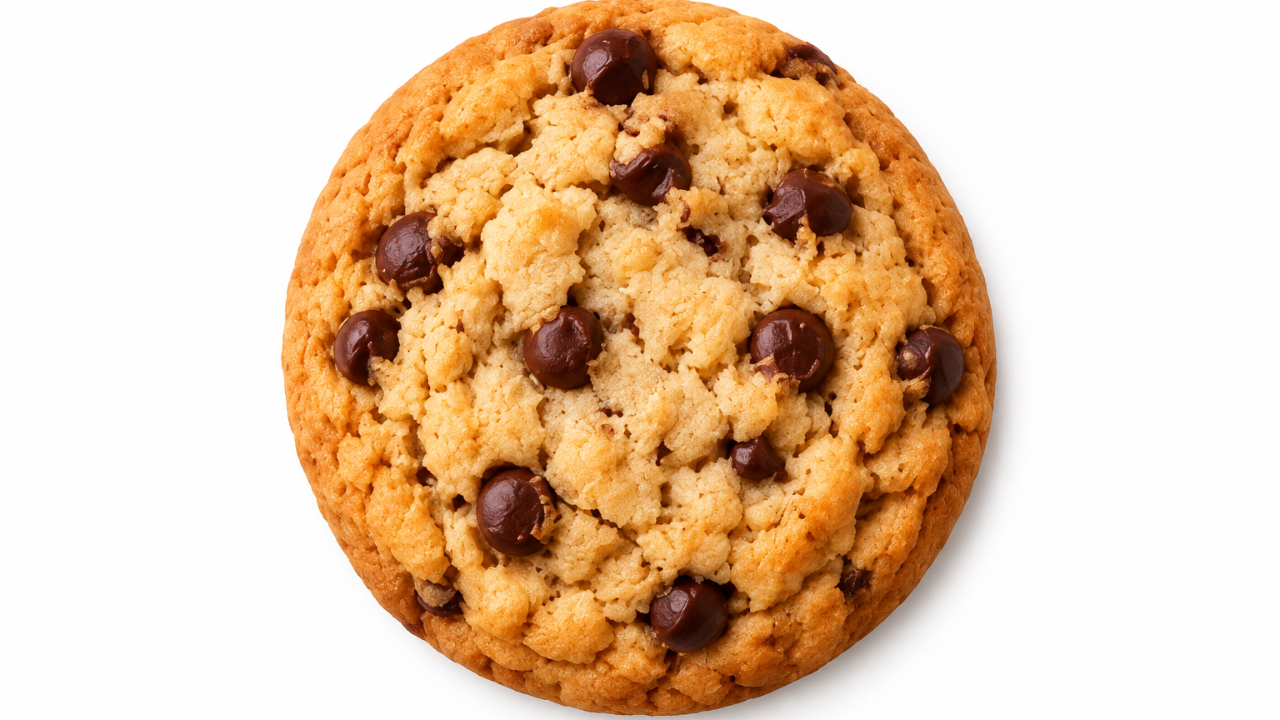
When students groan about fractions, they may not fully understand what a fraction represents. As a seventh-grade teacher, I have frequently encountered students who struggle to explain what a fraction actually means. In order to work with fractions and mixed numbers, students first need to understand these foundational concepts.
If your child struggles with fractions, a good place to start is by helping them understand what fractions represent. Before trying to teach students to add, subtract, multiply, or divide fractions and mixed numbers, they need this solid foundation.
What Is a Fraction?
A fraction represents a part of a whole. When we divide a whole into equally sized parts, a fraction tells us how many of those parts we are considering.
For example, if we divide a cookie into two equally sized pieces, each piece represents one-half of the cookie.
We write one-half as:
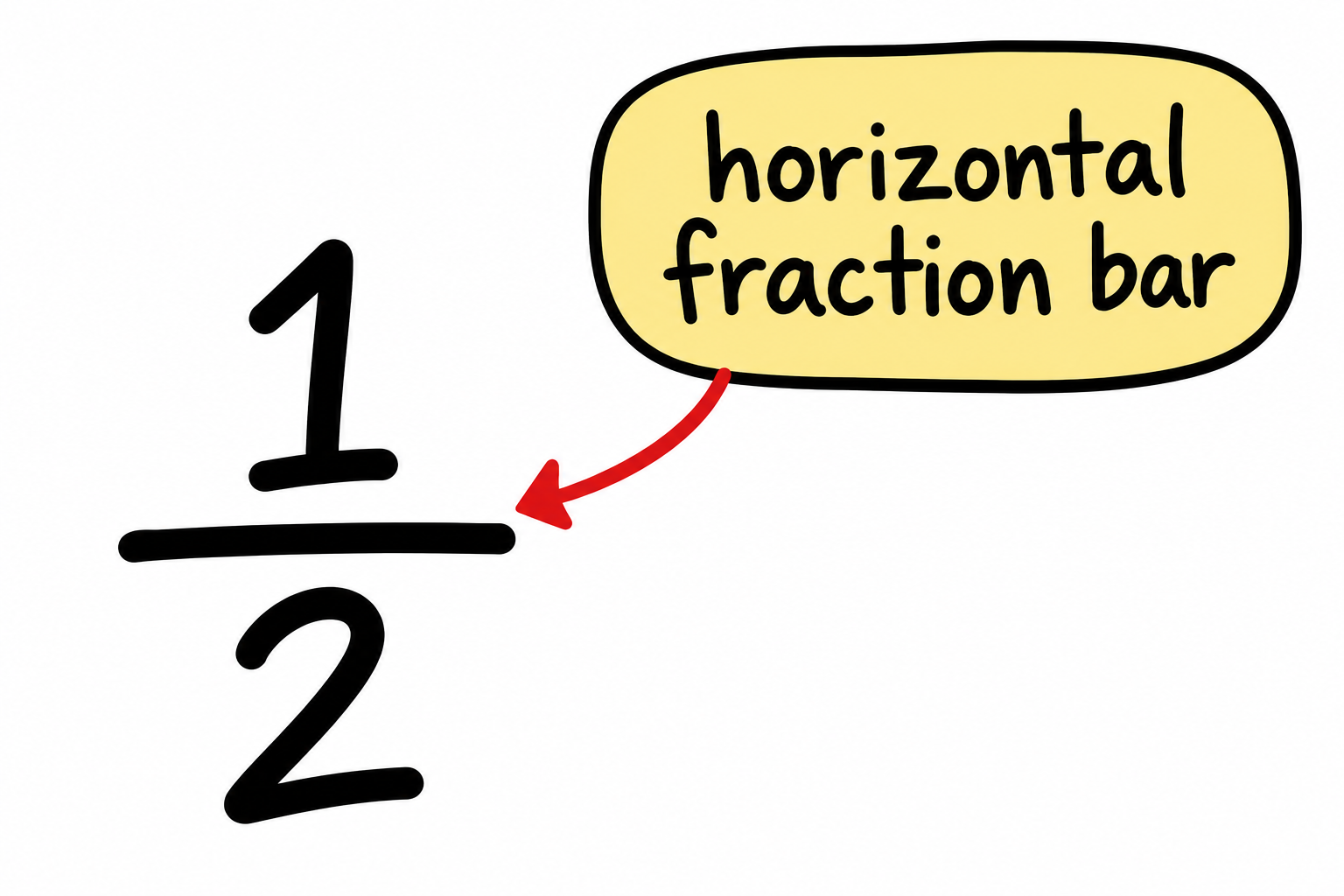
The horizontal line separating the two numbers is called the fraction bar.
Encourage your child to use a horizontal fraction bar when writing fractions by hand. In typed text, fractions are often displayed with a diagonal bar, like this: 1⁄2.
The top number in a fraction is called the numerator, and the bottom number is called the denominator.
- The denominator tells us how many equal parts make up the whole.
- The numerator tells us how many of those parts we are considering.
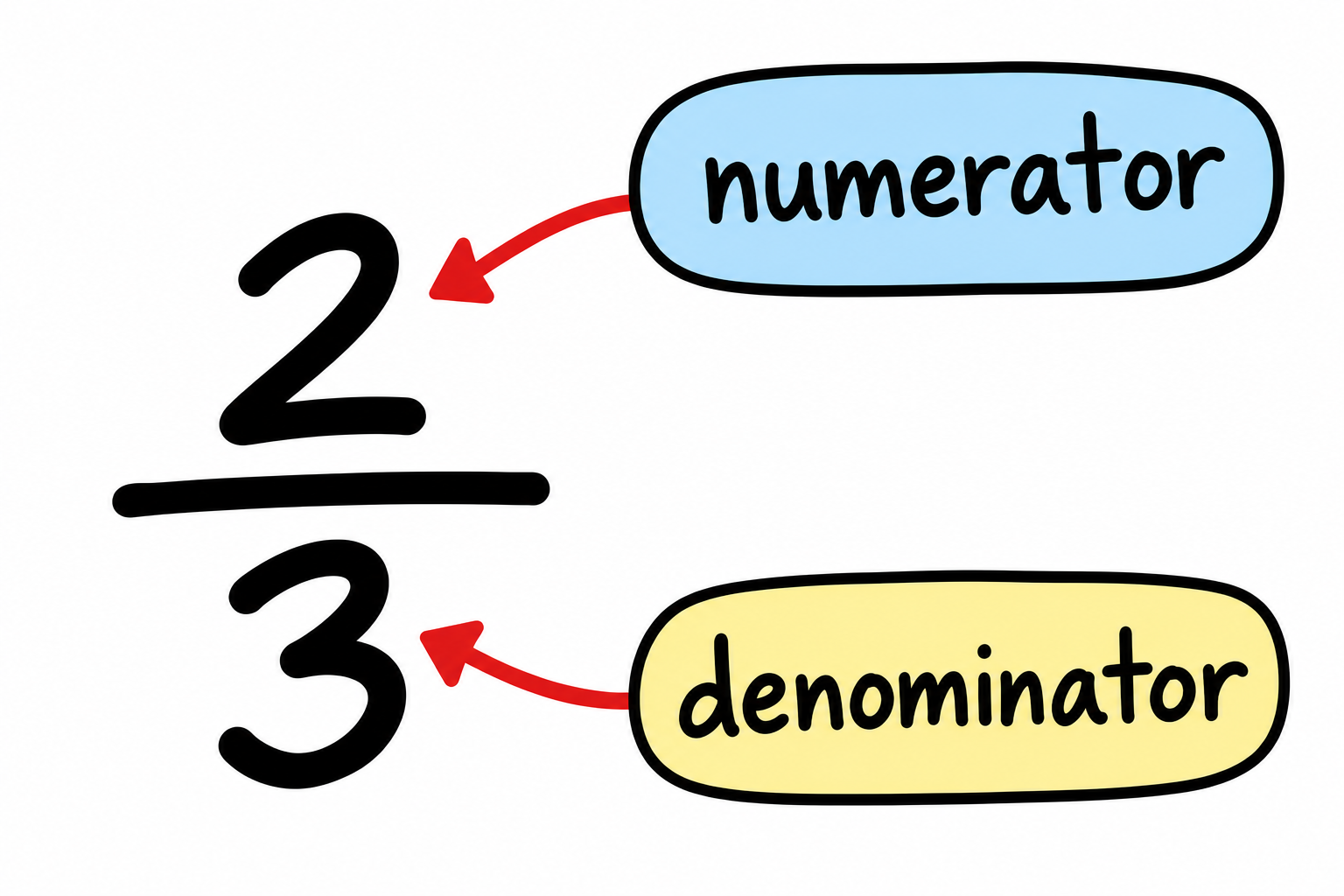
An easy way to remember these terms is this little saying: The denominator is down under, and the numerator is never under.
In a fraction, the denominator cannot be zero because we cannot divide a whole into zero equal parts. In mathematics, division by zero is undefined.
Remember that the parts must be equal in size. If we divide a cookie into unequal pieces, each piece does not represent the same fraction.
Teaching Fractions with a Cookie
Students need real-life, hands-on examples they can see and touch. Here is a yummy, fun way for parents to demonstrate fractions at home.
You will need a soft cookie, like a chewy chocolate chip cookie, a clean plate, and a plastic knife.
Begin by placing one cookie on the plate.
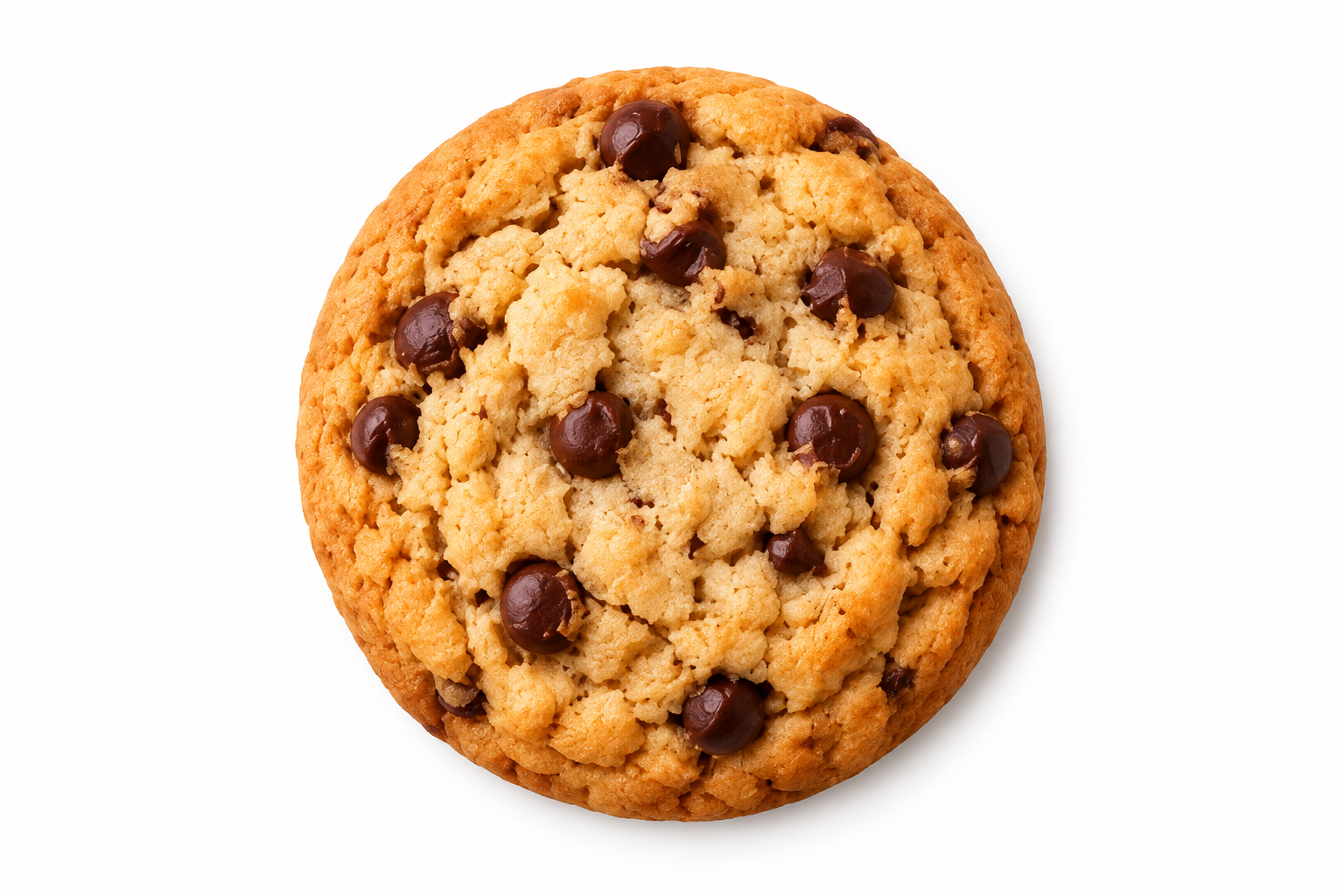
Ask your child, “How many cookies do we have?”
We have one whole cookie.
Next, cut the cookie into two equally sized pieces.
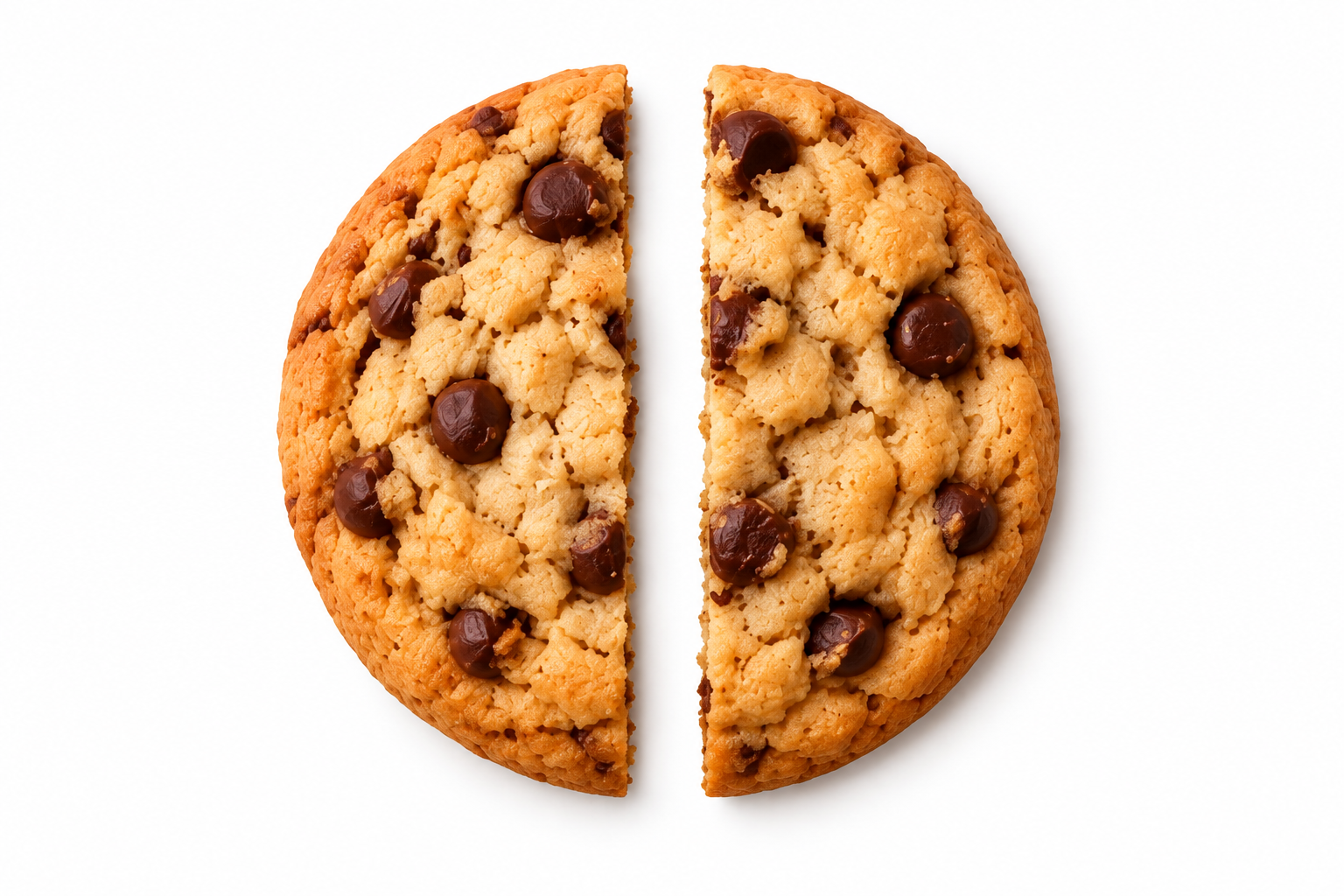
Each piece represents one-half of the cookie.
Ask your child to pick up one piece. Explain that we have selected one part out of two equal parts in the whole cookie.
We represent this as 1⁄2.
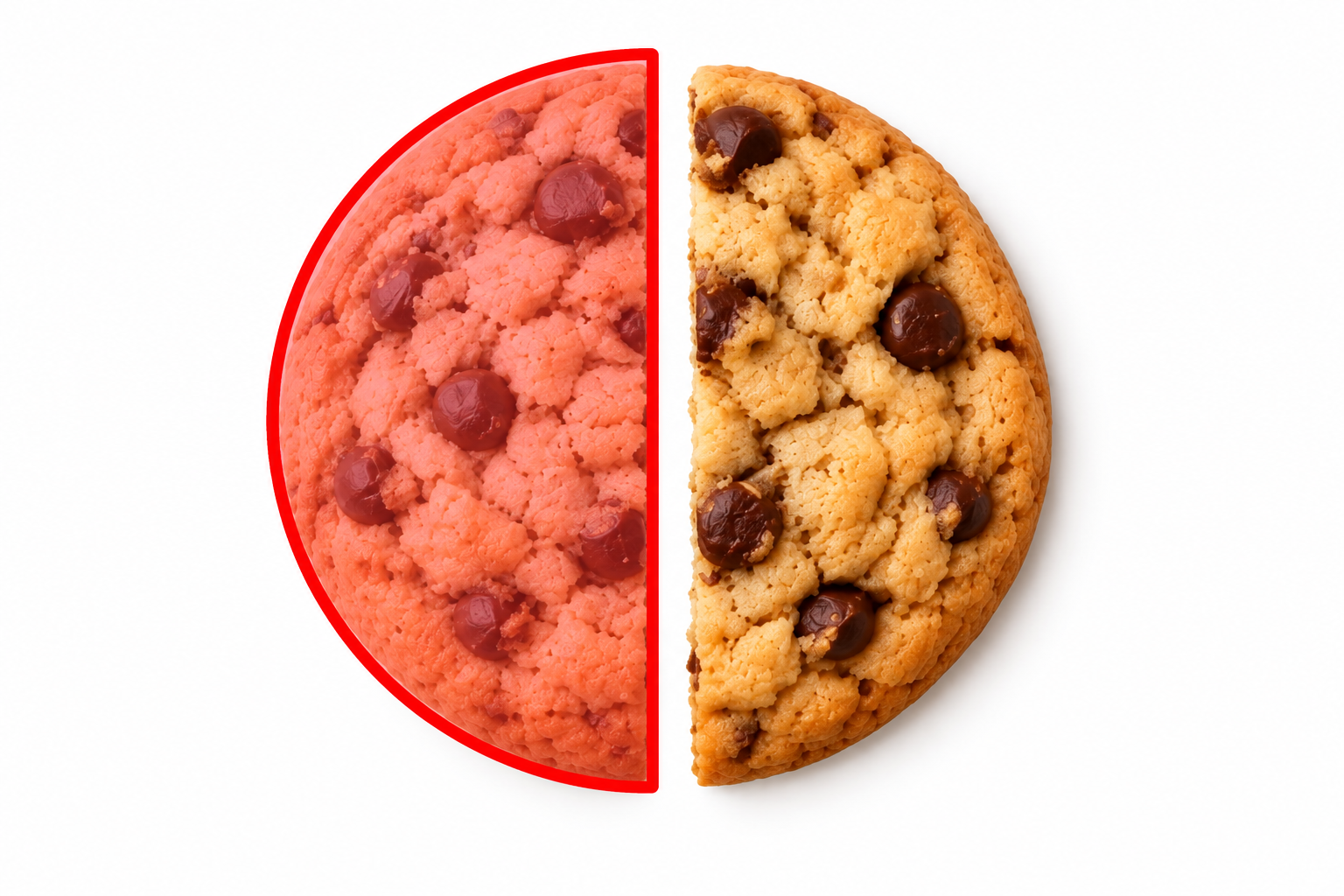
Now ask your child to put the two pieces back together.
We have two halves, or 2⁄2, which is equal to one whole cookie.
Here is a key concept: When the numerator and denominator are equal, the fraction represents one whole.
Exploring Other Fractions
You can repeat the demonstration with different denominators. Remember to divide the whole into equal pieces.
For example, 1⁄3 of a cookie is represented by dividing the cookie into three equally sized pieces and selecting one of those pieces.
Now ask your child:
- How would you represent 2⁄3 of a cookie?
- How would you represent 3⁄3 of a cookie?
- Which piece is larger, 1⁄2 or 1⁄3?
Notice that when we divide the same whole cookie into more equally sized pieces, each individual piece is smaller. So 1⁄3 is smaller than 1⁄2, and 1⁄4 is smaller than 1⁄3.
Exploring Fractions Greater Than One
We can extend this to illustrate quantities greater than one whole.
Suppose we have one whole cookie and a half of another cookie.
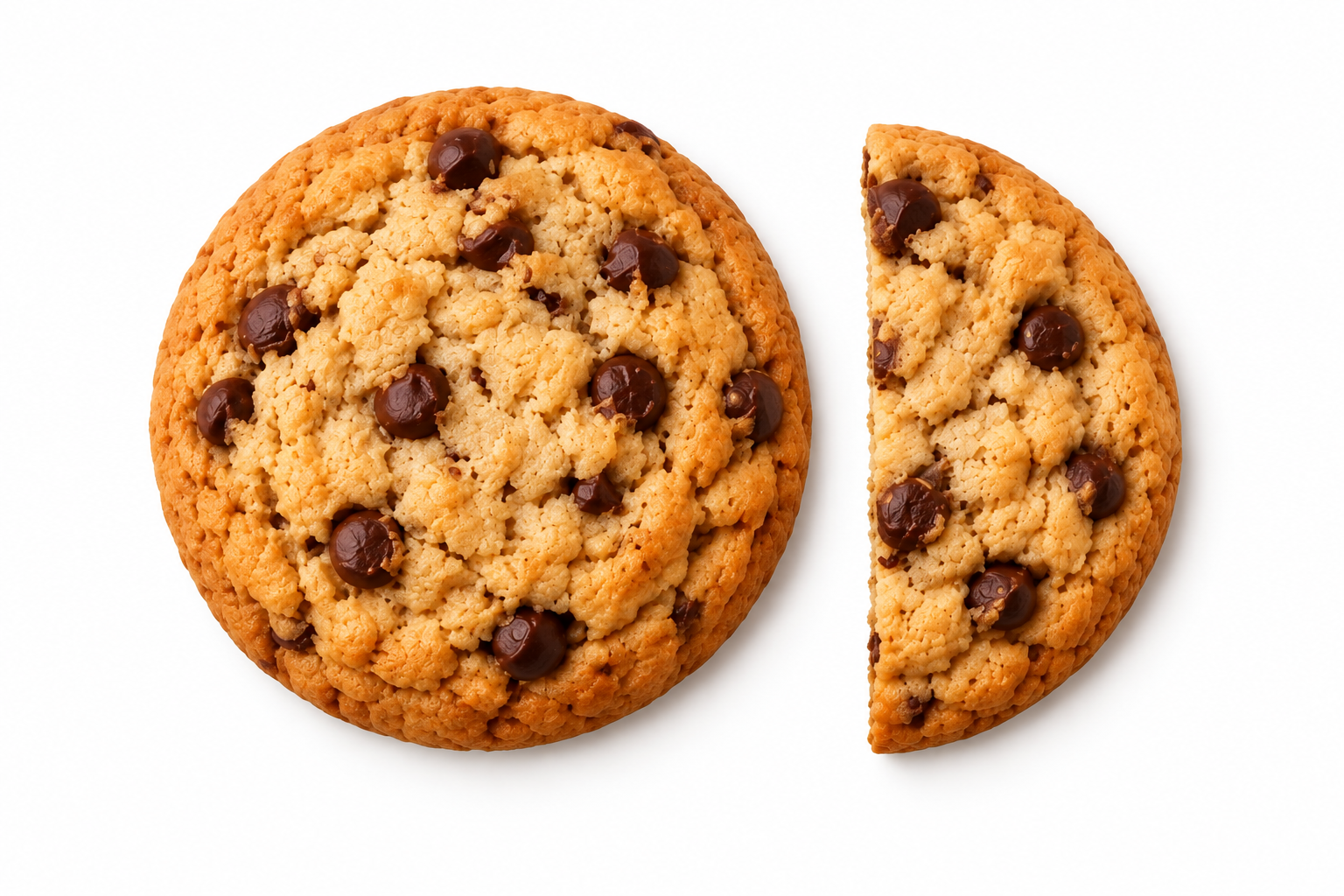
This is one and a half cookies, which we write as 1 1⁄2.
This is called a mixed number because it combines a whole number and a fraction.
Notice that one and a half is equivalent to three halves:
1 1⁄2 = 3⁄2
We call 3⁄2 an improper fraction. An improper fraction has a numerator greater than or equal to its denominator.
Both forms represent the same amount. Sometimes a mixed number is easier to use, and sometimes an improper fraction may be more useful when doing calculations.
Check Your Understanding
What does 1 1⁄4 mean?
It means one whole plus one-fourth of another whole.
Notice this can also be written as:
4⁄4 + 1⁄4 = 5⁄4
So:
1 1⁄4 = 5⁄4
Ask your child to explain why these two expressions represent the same amount.
Finding Fractions of a Group
So far, we have used cookies to represent fractions of one whole object. However, fractions can also represent parts of a group.
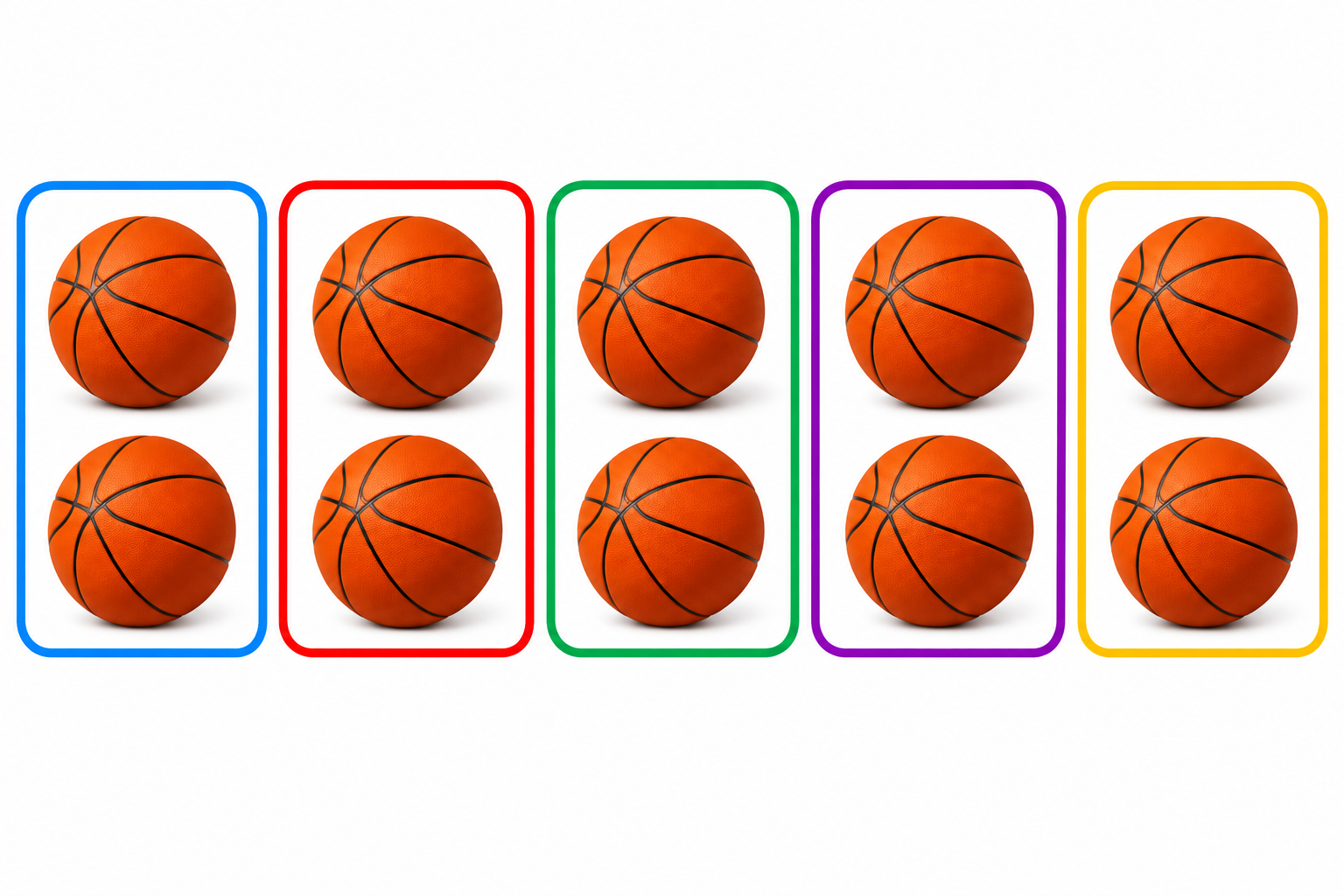
Suppose we have a set of ten basketballs.
How many basketballs are in 1⁄2 of the set?
Notice in this situation, one whole is represented by the entire set of ten basketballs.
We can divide the ten basketballs into two equally sized groups. When we divide ten by two, we get two groups of five.
So half of ten is five.
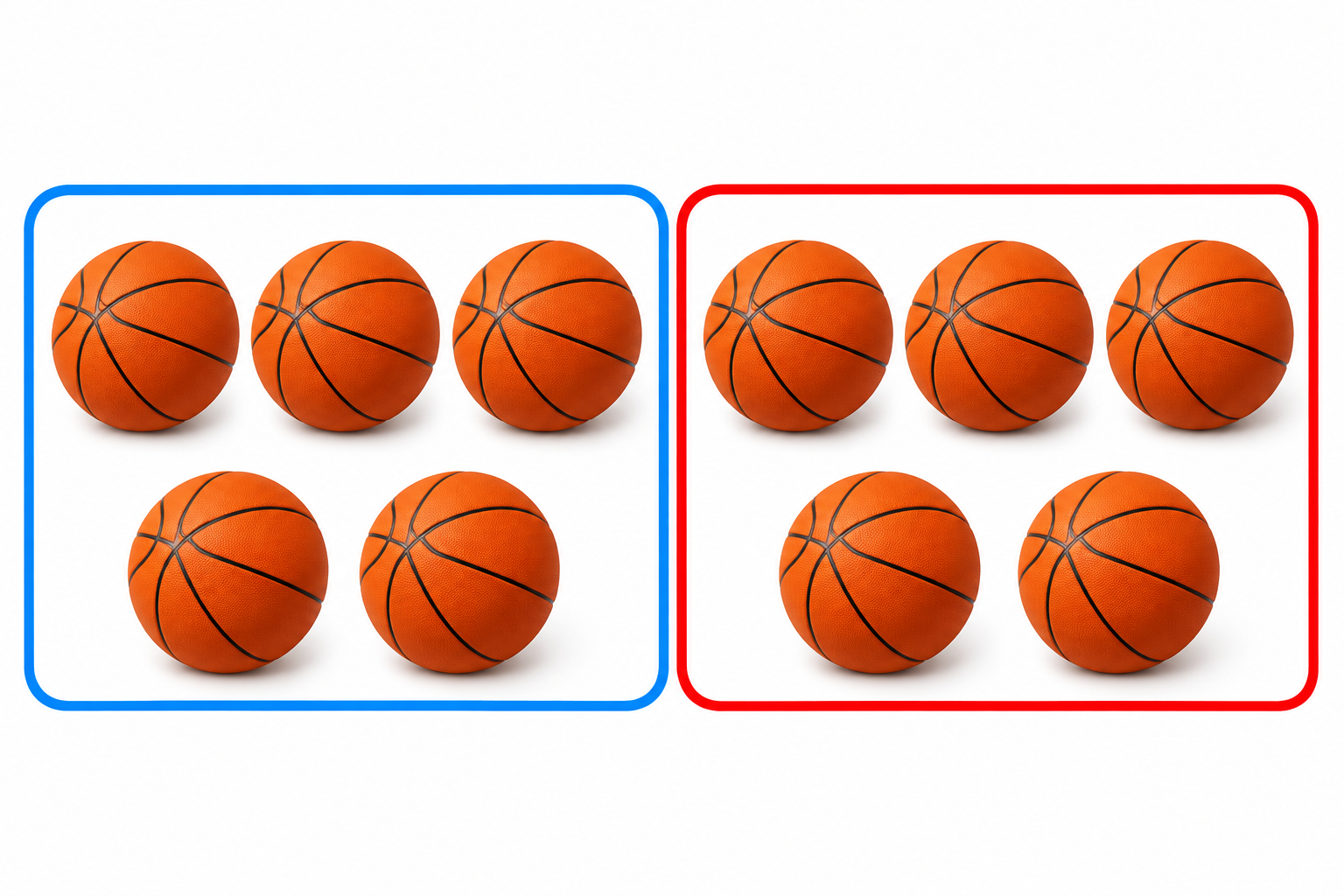
Let's explore a different fractional amount of the same size group.
How many basketballs are in 1⁄5 of a set of ten?
One-fifth of this set is found by dividing the whole group into five equally sized groups.
When we divide ten by five, we get five groups of two.
So one-fifth of ten is two.
Try This with Your Child
Suppose there are 50 people in a group.
How many people are in 1⁄5 of the group?
Ask your child to explain how they found the answer rather than simply giving you a number.
Understanding how is as important as getting the correct answer.
Common Fraction Mistakes
As your child works through these activities, watch for these misconceptions.
1. Thinking that unequal pieces can represent equal fractions.
If a cookie is divided into four pieces of different sizes, each piece does not represent one-fourth. The pieces must be equal in size.
2. Thinking that a larger denominator means a larger piece.
Students sometimes assume that 1⁄4 must be larger than 1⁄2 because four is greater than two.
Use the cookie demonstration to show that dividing the same whole into four equally sized pieces produces smaller pieces than dividing it into two equally sized pieces.
3. Forgetting what represents the whole.
One-half of a cookie is different from one-half of a group of ten people, but both represent one of two equal parts of their respective wholes.
Help your child identify the whole before working with a fraction.
Ideally, we want to address misunderstandings early. A student who develops a clear understanding of fractions will be better prepared for operations with fractions.
Building a Strong Foundation for Future Math Success
A good understanding of fractions and how to use them in simple real-life situations helps establish a solid foundation for future learning. Use fractions to describe quantities when it's natural—half of a sandwich, one-fourth of the people, one and three-fourths cups, etc.
When students understand what fractions represent, they are better prepared to learn equivalent fractions, find common denominators, and add and subtract fractions.
These skills are important for students in middle school as well as Algebra I, Algebra II, and higher-level mathematics. In addition, many careers require a working knowledge of fractions.
If your child is struggling to understand fractions, take time to explore these foundational concepts. Encourage them to explain their thinking, use hands-on examples, and practice until the ideas begin to make sense.
Written by Robin J. Phillips of Good Path Academy, an experienced math teacher helping middle and high school students build understanding, confidence, and a clearer path forward in math.
When Your Child Needs Additional Math Support
At Good Path Academy, we help middle and high school students build understanding, confidence, and a clearer path forward in math.
If your middle or high school child needs help understanding fractions, Personalized Online Math Tutoring can provide a diagnostic intake, a personalized learning plan, and weekly one-on-one instruction tailored to your student's needs.
Explore Personalized Online Math Tutoring
If your child understands basic fractions but struggles with adding and subtracting them, the Fractions Help Bootcamp: Add & Subtract Fractions provides structured instruction, guided practice, and live support to help students develop these essential skills.